17 April, 2021

Mt Sunday on a Saturday

 
South Island Safari, Day 1.  Hoping to explore the Ashburton Lakes Area, and walk up Mount Sunday.  A wet and cold start in Christchurch. The weather began to clear by the time we got to Mt Somers.  
I haven't been to this part of New Zealand before, and soon we had left the tarseal, and exploring the Canterbury highlands via the gravel roads.  It took about 3 hours to drive from Christchurch.  Leave Mount Somers on Ashburton Gorge Road, which becomes Hakatere Potts Road.

Our first sign of snow! Cloudy Peak 2400m and we discovered later, is at the end of the valley.
This valley has Two Thumb range on the left, the start of the Rangitata River, Cloudy Peak Range in the middle, Mt Jollie middle right, Mt Sunday (tiny "hill" bottom right), and Mt Potts on the right. Stunning day. Stunning Landscape.
Mt Sunday is the little hill in the vast valley.  Also you pass by the broad vista used for the 'Battle of the Pelennor Fields in the LOTR movie 'The Return of the King.'
A steep downhill into a the valley, the last part of the road is really rocky.  The Toyota Corolla handled it well.  Just go slow and steady.

 There was a few bridges to cross.  The day was just stunning. Mountains, hills, streams, snow in the distance.  No wind. An excellent experience for the urchins.

The track starts on Hakatere Potts Road, about 48 km west of Mount Somers. 

Carved by glaciers, this hill got its name because boundary riders from the high-country stations would meet here on Sundays.

Mt Sunday walk is a 1.5 km climb up a rocky hill. At the top is 360 degree views of the valley.
The trail is easy to follow, but beware of the Matagouri, a very thorny native plant, don't tangle with it.
There was a rock, so of course the urchins had to climb it.
This rocky outcrop is Mount Sunday.  The track is straight up.
This valley has been carved by a glacier. Looking East toward the Ben McLeod Range the way we had driven in. 
Gina at the top of Mount Sunday.  Amidst the vast Hakatere Conservation park in Mid Canterbury, the sheer-sided hill provided the perfect setting for Edoras - Rohan's capital city, in Lord of the Rings. 
All of us at the top. I would hate to be here on a windy day. There is no shelter.  

Looking towards the West Coast of New Zealand. Cloudy Peak Range.
Mt Potts
Mt Jollie
The Matagouri bushes line the trail.
After a quick snack in the carpark, we were on our way to Oamaru.

One last peak at the mountains before turning into the hills.
Autumn has started, and there are plenty of yellow trees highlighting the brown hills.

We took the opportunity to stop and see some of the early New Zealand artwork painted on rocks.

 at Cave, 3 Mile Bush Road and at 275 Frenchmans Gully Road, Maungati.

Richard Pearse Memorial at Temuka. The first flying machine airborne in March 1903. A high wing monoplane with a frame of bamboo and canvas covered wings. The tricycle undercarriage was of light steel tubing. Had wing flaps, rear elevator, steerable nose wheel, and a propeller. The internal combustion engine was designed and constructed by Pearse from cast iron irrigation pipe. The engine was described as a 25 hp water-cased engine in four part, and able to turn the propeller blades as 800 rpm.
Happened upon a Wallaby on one of the roads between Temuka and Oamaru. Arrived early evening in Oamaru


Post Note about Mt Sunday


Mount Sunday is a stunning site, with expansive views of the Rangitata River and the surrounding mountains. This has to be one of the most remote Lord of the Rings locations one can publicly access.

Amidst the vast Hakatere Conservation park in Mid Canterbury lies Mount Sunday, a sheer-sided hill that provided the perfect setting for Edoras - Rohan's capital city.

Building the Edoras village set was a massive undertaking, not only due to the remoteness of the location but also because of the high north west winds that are funnelled through the valley. It needed the New Zealand army to build several hundred metres of access road before the production crew was able to access the hilltop and start with the set construction. All the structures had to be secured to the rock with iron pegs in order to withstand the elements.

The focal point of the set was Meduseld - The Great Golden Hall of the Kings which stood atop the hill, overlooking around a dozen other buildings, including the stables, the gatehouse and a wooden tower.


Filming only took about three weeks, with all the interior scenes shot in the studio in Wellington. After the wrap, the entire set was dismantled, and everything was returned to its natural state.

Also you pass by the broad vista used for the 'Battle of the Pelennor Fields" in the movie The Return of the King.

16 April, 2021

Road Trip time - Off to the mainland

 With the covid-19 situation, we decided to avoid overseas travel this year, and visit the mainland of New Zealand instead.  The day got off to a bad start as the flight delayed due to engine damage by bird strike, on coming into land in Rotorua. Had to wait for a new crew to arrive from Tauranga, and an engineer to assess the damage and then repairs to be made.


Jean Batten Airport, named after Rotorua's famous aviatrix.

First time the urchins have flown Domestic. The airport was a bit smaller than what they were used to.  Took about 50 steps from check-in to reach the departure lounge.  All the gates leave from the same door.  No customs, No duty free, and the only shop there was closed.

About every hour we got an update informing us that the flight has been delayed, and we need to wait some more. The urchins played electronic games for a while.

The whole flight got meal vouchers for lunch.  The cafe had great food, and my mushroom spinach and cheese toasty was just what I needed.
More delays, not much we could do except eat jet planes while waiting for a plane.

The books came out, and the urchins caught up on some reading.

We finally departed Rotorua at 4.45pm. A long day waiting.
Always enjoying looking at the land of the long white cloud.

"Snakes on a plane!"
Manage to sort out the rental car, and find our way to Gina's place.  Went out to dinner with her.  Remembrance Bridge in central Christchurch.
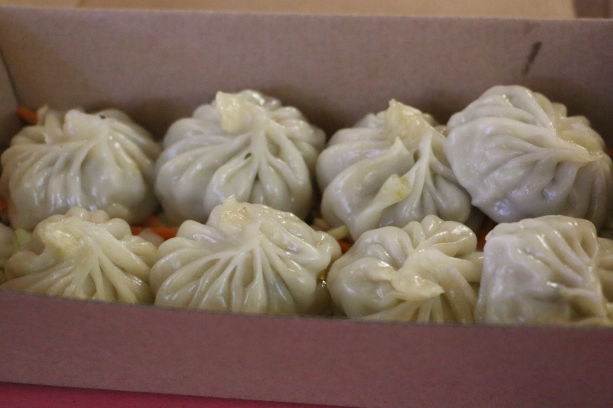
Riverside market is vibrant and full of cafes, bars, and has many different eateries. Gina and Quinn had Vietnamese, and Tighe and I had dishes from Nepal. Fabulous flavours. I think I could eat here for a whole year, and not have the same thing twice. So much choice
Dessert was at Rollickin's gelato. Great names for the ice cream. I had the Yogi Bear. Oh lala! A taste sensation.
Spent the rest of the evening at Gina's place. The urchins tried out the pinball machine.


04 April, 2021

Night time wander

 
Installed several months ago, I had not had the opportunity to see the Hemo Gorge sculpture Te Ahi Tupua at night. The sculpture stands about 12m high, and is designed by Stacy Gordine.

Most oral traditions from Te Arawa-Tuwharetoa and Mataatua sources ascribe the origin of Geothermal activity in the Taupo Volcanic Zone to the exploits of Ngātoroirangi, and his sisters Kuiwai and Haungaroa, aided by the Atua (supernatural deity’s) Te Pupu and Te Hoata.

Te Arawa a confederation of tribes “Mai Maketu ki Tongariro” have held firm to their oral traditions passing these from generation to generation in perpetuity ensuring the continuation of their culture, their customs and the practice of ancient traditions through which they maintain a strong sense of spiritual connection to their spiritual homeland of Hawaiki. One such narrative recants the indigenous world view of geothermal origins. A journey of exploration by Te Arawa ancestor Ngātoroirangi who ascended Tongariro, where he almost perished, so intense was the cold on that mountain. Ngātoroirangi called upon his tuahine (sisters) Kuiwai and Haungaroa to send heat and warmth to him, lest he perish. There is a clear correlation made within these traditions between the volcanic mountains and areas of surface geothermal activity, the hot springs, geysers, mud pools, sinter terraces and steam vents.

Te Pupu and Te Hoata, the Atua (supernatural deity’s) of heat and fire, are remembered for creating the geothermal imprint from far off Hawaiiki throughout the subterranean Tongan and Kermidec Trench’s, to the Volcanic landscapes of Whakaari (White Island) Moutohora (Whale Island), just off the East Coast of the North Island near Whakatane through to Mt Tongariro in the Central Plateau, in search of Ngātoroirangi, the great Ariki and tohunga of the Te Arawa Waka (canoe).

Te Ahi Tupua is a contemporary artwork which commemorates this subterranean journey of these Atua and a direct correlation between their journeys throughout the subterranean catacombs and the post eruption surface features. These strands of rising heat and steam symbolically represent the connectedness of the communities who have made these special places their homes among Geothermal fields and the post eruption caldera’s within the Taupo volcanic zone.

27 March, 2021

Kotare in the Kauri Tree


This kotare has been watching the fish the pond for a few days now. Hopefully they have enough lilypads and other plants to hide under. Stunning blues on the wings.

14 March, 2021

Cheese rolling, running, and trolley


Tighe and Quinn spent the afternoon in Tokoroa, competing at the National Waikato Cheese Rolling Championships. They won a few kilos of cheese. Beautiful aged salted cheese.

Cheese Rolling, Slippery slide, Trolley Derby, Tossing the caber, Gumboot throwing and Egg throwing in teams.

They had spent several weekend building the trolley.

The National Waikato Cheese Rolling Championships is held yearly in Tokoroa Cheese Rolling is an ancient sport originating from Gloucester, England.

As far as we know, Tokoroa is the only Cheese Rolling town in NZ and thus the winner here is the New Zealand Cheese Rolling Champion. Tighe came second in the cheese rolling, and Quinn came third in the trolley derby.

The cheese is wrapped in muslin which protects it and it is 14 inches in diameter and four inches thick. It is the traditional size but the hill is not quite as steep,"


04 March, 2021

Shooting the hoop

Sometimes after an urchin has cooked dinner, he pops out to shoots some hoops. Not sure if the redband gumboots and apron will start a fashion trend.

While the urchins were shooting hoops, a rainbow was in the clouds.