Showing posts with label Day 6. Show all posts

07 September, 2015

Lunch Time, Northern Efate

Emao Island
The urchins were getting hungry, it was about 1ish, so Beachcomber was our next stop, near Quoin Hill, and the disused American WW2 airstrip.

These are remnants of the USA that they built out of coral and dirt, so the pilots could see the USA from the air.

There were mounds of coral. My guess is that the debris from Cyclone Pam was put into these mounds, so that the grass could be used for the cattle and goats.


There are HOT springs at Beachcomber; the roof is still very damaged.  Hot chips for the urchins, toasted sandwich for me, steak sandwich for him.  We were the only customers.  The EFTPOS didn’t work, as the generator was unreliable.  

 Anneke  declared the indoor hot pool, TOO hot, but swam in the outdoor pool.  


Tighe and Quinn explored the area, and the debris from Pam is still evident in the area.  Twisted corrugated iron, pushed over trees, and wreaked homes are all visible.  Some of the people are living in tents.
Debris from Cyclone Pam
Quoin Hill in background


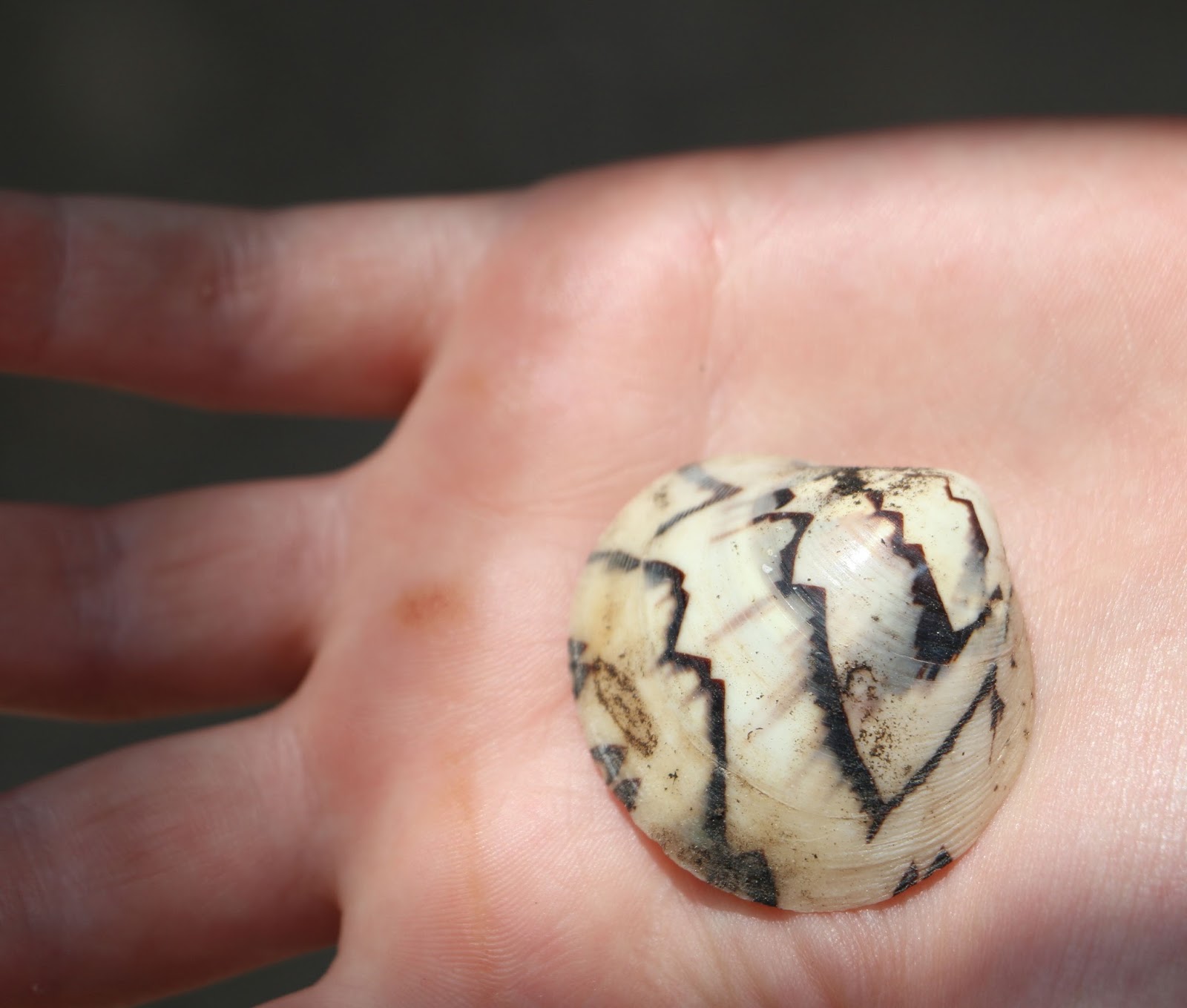
Tighe, Quinn and I picked up shells on the coral beach.  Lots of variety, and sizes.  Tighe found some huge shells.  (There were no shells at Hideaway Island, the hermit crabs use them).
From the shore, Tighe spotted a TitanTrigger fish (75cm) eating the coral.  We watched him for a while.
Titan Triggerfish (source www.fishesofaustralia.net.au)

Northern Eftate - Underwater Wreck F4U Corsair WW2 Plane


The Corsair ditched just off shore from the Quoin Hill Fighter Strip at the northeast corner of Efaté, in WW2
Quinn was looking forward to seeing the World War 2 Muesum, and snorkelling the aircraft wreck. but the gate was locked!  Kaupi managed to unlock the gate, and we drove off into the jungle.   
Unfortunately the museum had been blown away by Cyclone Pam, and a new one is planned.  
 A man on a bicycle said he would take us to the submerged Corsair Fighter Plane wreck, and we could snorkel over it.
 A clamber into a tiny metal boat, through a mangrove swamp, and out into the lagoon.  The tide was still low, and the boat kept running aground.
 The view was amazing, Emoa Island straight ahead, locals fishing by wading in the shallows, their outrigger canoe nearby.
Emoa Island
 More islands to the left, Kakula is the closest, and Nguna and Pele behind it.
 The breeze was brisk, and the tiny boat rocked on the waves.  We got splashed a lot.  The urchins laughed. What an adventure.

The wreak was about in just over 2m of water, and the wind made the waves choppy.  
Cockpit
 I found myself being blown away from the wreck when I was on top of the water. 


F4U Corsair wreck
Left wing of Corsair
Vertical stabiliser of the Corsair
Horizontal stabiliser and elevators of Corsair
Tail of Corsair
Coral growing on wing of Corsair
Horizontal stabiliser and elevators of Corsair
Visibility was not the best under the water, but we all got to see and touch the wreak.   A school of Anemone fish were at the tail.  Erik and Tighe sat in the cockpit.  The wind picked up, the water got choppy and once we got cold, it was time to climb back into the small boat, and go back into the mangrove swamp.
Anemone fish on coral growing on wreck
The Corsair ran out of fuel just shy of the landing strip on Efaté
The wreck sits in shallow water, and is covered in algae.
Engine Cowling of the Corsair
The Corsair ditched just off shore from the Quoin Hill Fighter Strip at the northeast corner of Efaté, in WW2
Vertical stabiliser of the Corsair
 The pilot ran out of fuel, and had to ditch the plane in the sea.  He parachuted to dry land.
Erik trying out the cockpit of Corsair

View from cockpit
Rudderless remains of the vertical stabiliser of the Corsair
Anemone Fish on Coral - Wing of Corsair wreck
Right Wing of Corsair

West Efate - School, and WW2 Souvenirs

Nguna Island and fishermen
Today I snorkelled over a WW2 Corsair Fighter Plane wreck, ate Flying fox and Pigeon for dinner, and discovered not all nocturnal large winged insects are moths. A day of exploration, North, South, East and West around Efate.
Our taxi for the day, Kaupi picked us up at 8:30am, and we saw the effects of Cyclone Pam up close. 
The local school in Mele Village is teaching in tents.   3 Buildings have been completely rebuilt.
The new office and library
Year 7 and 8 sang us a song
New Zealanders have sponsored some rebuilding, and in 3 days in June, they rebuilt rooms 7 & 8, the office and Library.
  

Part of the rebuilt classrooms
 We donated some school items and soccer balls for the children, then Kaupi showed us around his village Mele.  Pigs and chickens roam free.  
Concrete buildings are more popular than the traditional woven ones, because of their strength, but are not as cool in the summer heat.
 We travelled clockwise around the island, past Melemaat, and the Mele Cascades, up the hill, and onwards to a new adventure.   
Hide away Resort, Mele Island, Mele Bay and Village
 Down the other side of the hill, and we could see Hat Island (Eretoka) and the blue of Havannah Bay.
Eretoka in the distance, Lelepa on the right
Lelapa Island on left, Moso Island on the right
The road is in good condition on this side of the island.  Saw a several islanders making the most of their natural resources, and using the streams for water, laundry and bathing.

  
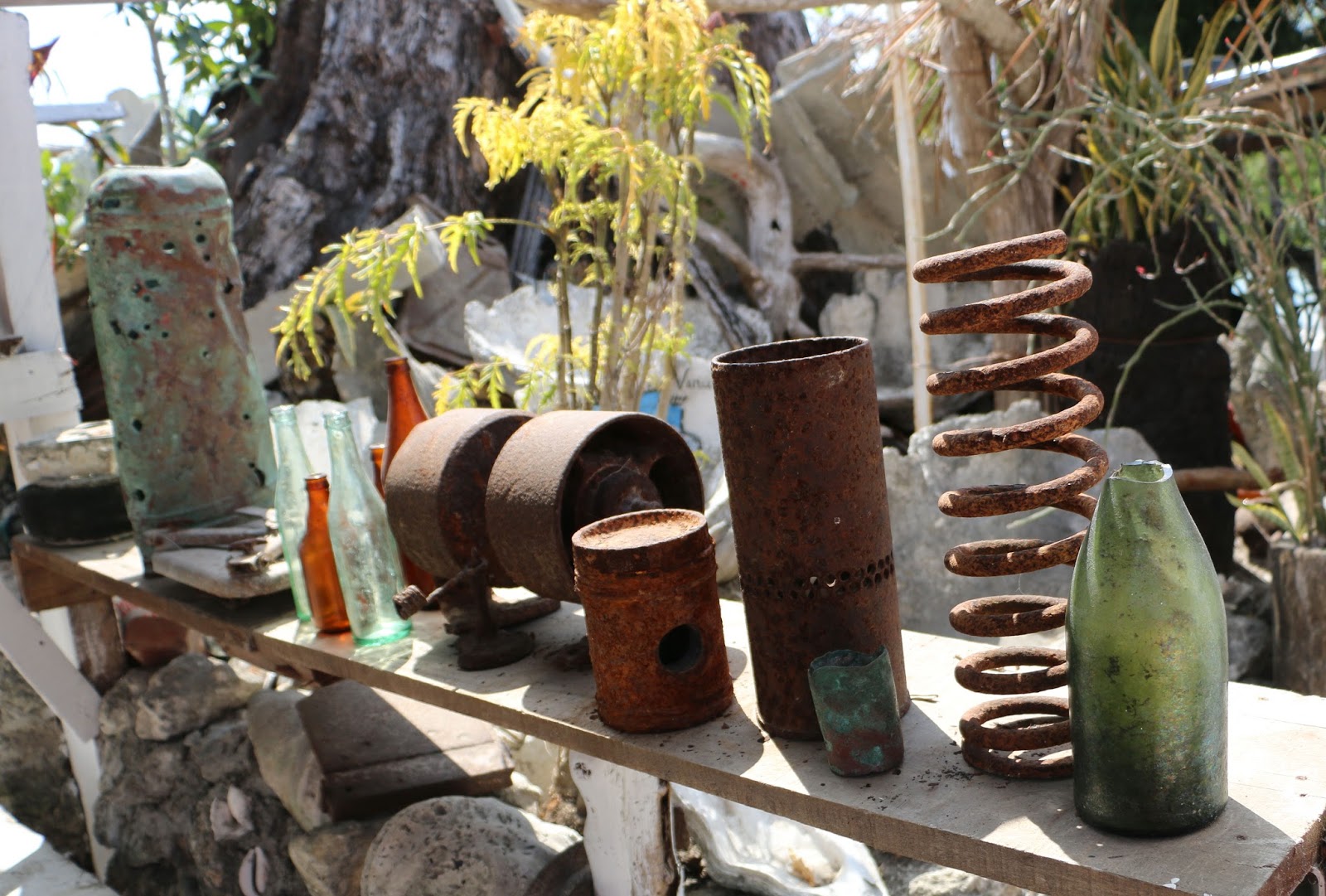
 The USA had a base at Port Havannah in WW2, and left remants of their stay.  A tiny museum on the roadside, with Mark, gave Quinn an insight into some of the American activity in the area.   


The Coke bottles were interesting.   


They have a USA city stamped into the bottom of them, and a date on around the edge.


Mark, wearing a Rotorua Marathon T shirt
 The US built a swimming pool, but it is used as a water reservoir now.
Further North were the rusty tracks of a tank, stuck in Undine bay.  

 There were a few machinery wrecks in the vicinity, and the urchins explored them all.
 I have no idea what type of machine, but Quinn managed to find some treasures to bring home.


 Tighe and Quinn enjoyed this step back in time, and we watched the fish jump and swim in the tiny bay.   
 
There are several dug out outrigger canoes in the bay.  The Islanders were fishing with handnets.
 Lots of coconut plantations around this part of the island, and a solar power station provides power for the coconut processing plant.   

Tighe thought that climbing the fence would make you “insane” because of the Bislama language on the sign.

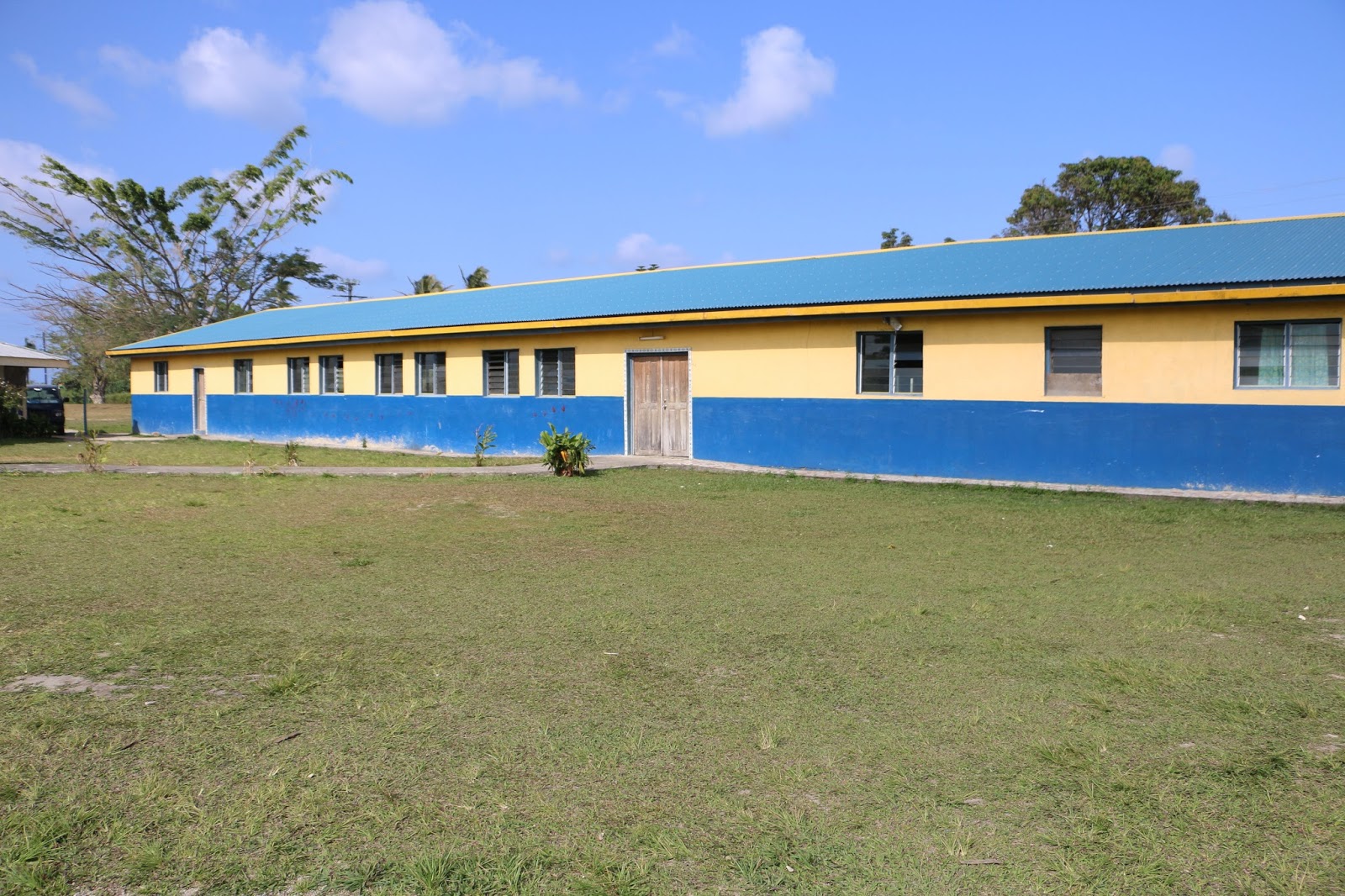
 We dropped some more items and a soccer ball off at Napara school.  They managed to get the roof put on 3 weeks ago, as a result of generous donations from New Zealanders.  The teachers accommodations had been destroyed.  They are living in the area with the villagers.  A child had injured his foot, so we squeezed everyone into the van, and took him and the principal to the medical centre about several kms away.  Next stop, snorkelling a WW2 fighter plane wreck.
Napara School